On this page
Quick answer
Florida law allows some criminal history records to be sealed or expunged by court order. Sealing makes a record confidential; expunction requires most agencies to destroy it. In general, a person qualifies only if they have never been adjudicated guilty of a crime in Florida, the offense is not on the excluded list, and they have not had another record sealed or expunged. The process starts with a Certificate of Eligibility from the Florida Department of Law Enforcement (FDLE), and the final decision belongs to a judge.
Key takeaways
- Sealing and expunction are different. Which one applies depends mainly on how the case ended.
- Any adjudication of guilt for a crime in Florida, including a misdemeanor, generally disqualifies a person.
- Some offenses can never be sealed or expunged when the case ended in a guilty or no-contest plea, even if adjudication was withheld.
- FDLE says a person is entitled to one court-ordered sealing or expunction in a lifetime.
- A Certificate of Eligibility is not a guarantee. The court can still deny the petition.
Sealing and expunction: the difference
| Sealing | Expunction | |
|---|---|---|
| Statute | Section 943.059, Florida Statutes | Section 943.0585, Florida Statutes |
| What happens to the record | It is preserved but made confidential and unavailable to the public. | Agencies that hold it must physically destroy or obliterate it. FDLE keeps a confidential copy. |
| Typical situation | Adjudication was withheld after a plea. | No charge was filed, the charge was dismissed or dropped, or the person was acquitted. |
A record that was sealed because adjudication was withheld can later become eligible for expunction once it has been sealed for at least 10 years. See the glossary entries for sealing and withhold of adjudication.
General eligibility rules
To qualify for a court-ordered sealing under Section 943.059, Florida Statutes or expunction under Section 943.0585, Florida Statutes, a person must show, among other things, that:
- they have never been adjudicated guilty of a criminal offense in Florida, and have not been adjudicated delinquent for a felony or one of the misdemeanors listed in the statute;
- they were not adjudicated guilty of any charge arising from the arrest they want sealed or expunged;
- they are no longer under court supervision for that case;
- the record is not one of those made ineligible by Section 943.0584, Florida Statutes,; and
- they have never before had a record sealed or expunged under these statutes, apart from the sealed-for-10-years route to expunction.
For expunction, the case must also have ended in one of the ways the statute lists: no charging document was filed, or the charge was dismissed, dropped by the prosecutor, or ended in an acquittal or not-guilty verdict.
Offenses that cannot be sealed or expunged
Section 943.0584, Florida Statutes, lists offenses that are ineligible when the case ended in a finding of guilt or a plea of guilty or no contest, whether or not adjudication was withheld. The list includes:
- sexual offenses, including any offense under chapter 794 and offenses requiring registration as a sexual offender;
- domestic violence assault or battery;
- aggravated assault, felony battery, and aggravated battery;
- stalking, kidnapping, and false imprisonment;
- robbery, carjacking, and burglary of a dwelling;
- child abuse and abuse of an elderly or disabled person;
- manslaughter and homicide offenses;
- arson; and
- manufacturing a controlled substance and drug trafficking.
This is a summary. Read the statute for the complete list.
The process, step by step
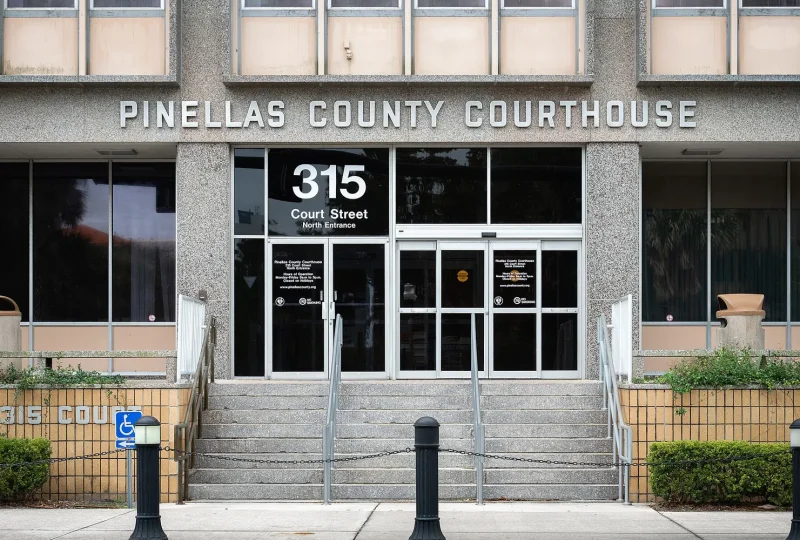
- Get the case documents. A certified copy of the final disposition of each charge comes from the clerk of court in the county where the case was handled. In Pinellas County that is the Clerk of the Circuit Court.
- Complete FDLE’s application. The application for a Certificate of Eligibility must be signed in front of a notary or a deputy clerk and submitted with fingerprints and the processing fee. The statutes set the fee at $75, which FDLE’s executive director may waive.
- For expunction, get the prosecutor’s statement. The State Attorney’s Office completes a written certified statement that is part of the application.
- Wait for FDLE’s decision. FDLE states that reviewing a complete application typically takes about 12 weeks. If the person is eligible, FDLE issues a certificate that is valid for 12 months.
- File a petition in court. The petition, with the certificate and a sworn statement, is filed in the court that handled the case, and the State Attorney is served.
- The judge decides. Both statutes say they create no right to relief and that a petition may be denied at the sole discretion of the court.
- The order is carried out. If the petition is granted, the clerk sends the order to the agencies that hold the record.
What a sealed or expunged record means in practice
In general, a person whose record has been sealed or expunged may lawfully deny or fail to acknowledge the arrests covered by it. The statutes list exceptions. They include when the person:
- is a candidate for employment with a criminal justice agency;
- is a defendant in a criminal prosecution;
- is applying for admission to The Florida Bar;
- is seeking employment or licensing in certain positions involving children, people with disabilities, or the elderly, or with certain education and child care employers;
- is seeking a license from the Division of Insurance Agent and Agency Services, or appointment as a guardian; or
- for a sealed record, is trying to buy a firearm or applying for a concealed weapon license.
A sealed record is not destroyed, and certain agencies can still see it. Sealing and expunction under Florida law also do not control what federal agencies, private data companies, or old news stories retain.
Other routes
Court-ordered sealing and expunction are the most common paths, but Florida law has others with their own rules, including administrative expunction of an arrest made by mistake or contrary to law (section 943.0581, Florida Statutes), expunction for people found to have acted in lawful self-defense, expunction for victims of human trafficking, juvenile diversion expunction, and automatic sealing of certain records by FDLE.
Common questions
Can a conviction be expunged in Florida?
Generally not through these statutes. A person who has been adjudicated guilty of a crime in Florida does not meet the eligibility requirements.
Can a DUI be sealed or expunged?
A DUI conviction cannot, because Florida law requires an adjudication of guilt in DUI cases. See DUI in Florida.
Does a dismissed charge disappear on its own?
No. Without a sealing or expunction order, the arrest generally stays in the person’s criminal history even if the charge was dropped. Florida does provide for automatic sealing of some records by FDLE, but that does not remove the court file held by the clerk.
Can I seal one record now and another later?
Generally no. FDLE states that a person is entitled to one court-ordered sealing or expunction in a lifetime under these statutes.
About eligibility
Only FDLE can issue a Certificate of Eligibility and only a judge can order a record sealed or expunged. Nothing on this page determines whether a particular person qualifies.
When to speak with an attorney
Eligibility turns on the exact disposition of each charge and on a person’s whole record, and because the opportunity generally comes once, an error can be costly. A licensed Florida attorney can review the dispositions before an application is filed. This guide provides general educational information; eligibility depends on the specific facts and on current Florida law.
Official resources and sources
- Seal and Expunge Process — Florida Department of Law Enforcement: applications, instructions, and processing times
- Section 943.0585, Florida Statutes — court-ordered expunction
- Section 943.059, Florida Statutes — court-ordered sealing
- Section 943.0584, Florida Statutes — records ineligible for court-ordered expunction or sealing
- Section 943.045, Florida Statutes — definitions of sealing and expunction
- Pinellas County Clerk of the Circuit Court — certified dispositions and court records