Know Your Rights in Florida — A Plain-Language Guide
The constitutional protections that matter most in everyday situations — explained in plain English with examples.
Navigate Florida criminal law with calm, intelligent, attorney-reviewed guidance — built for arrests, DUI charges, court process, and informed legal decisions.
I was just arrested — what now?This website is for informational purposes only and does not provide legal advice. Consult a licensed attorney for guidance about your specific situation.
A 9-question, plain-language self-assessment that helps you understand which Florida criminal-law topics to learn about first. Results stay on your device. Educational only.
Consult a licensed attorney for legal advice.
Plain-language explainers for the most common Florida criminal-law situations.
The constitutional protections that matter most in everyday situations — explained in plain English with examples.
BAC thresholds, administrative suspension, IID rules, and how DUI cases typically move through the system.
What happens at booking, first appearance, and bond — and what to do before you ever speak to investigators.
Stages, timelines, and key decision points from arraignment through trial or alternative resolution.
Florida felony classifications, sentencing ranges, and the major differences from misdemeanor cases.
How bail amounts are set, the role of pretrial services, and the conditions you may face after release.
Eligibility rules, key differences between sealing and expungement, and the typical procedural path.
A curated list of attorney questions, documents to bring, and what to listen for in a consultation.
Select your situation to personalize the rest of this page. Your choice saves to your device.
Florida DUI law covers driving with a BAC of 0.08% or higher, or while impaired by substances. Penalties escalate with prior offenses, high BAC, injuries, or a minor in the vehicle.
Includes simple assault, simple battery, aggravated assault, and aggravated battery. Classification depends on intent, injury, weapon use, and victim status.
Includes possession, possession with intent, sale, and trafficking. Schedule of substance, quantity, and location can transform charge severity.
Florida classifies theft based on the value of property taken and aggravating circumstances. Repeat offenses elevate severity.
Florida treats domestic battery as a distinct category with no-contact orders, firearm restrictions, and counseling requirements common.
Includes driving with suspended license, leaving the scene, reckless driving, and racing. License-status charges often hinge on knowledge.
Juvenile system focuses on rehabilitation; outcomes range from civil citations and diversion to direct file as an adult for serious felonies.
Includes identity theft, organized scheme to defraud, forgery, and embezzlement. Restitution and federal-state overlap are common.
An educational range estimator. It does not predict your case, and it is not legal advice — laws and outcomes vary.
A calm, educational walkthrough of the Florida criminal court process — from arrest to resolution. Tap a stage to learn more.
A law-enforcement officer takes a person into custody. Miranda warnings are required only before custodial interrogation.
Consult a licensed attorney for legal advice.
Identification, fingerprints, mugshot, and intake at the jail. Personal property is inventoried.
Consult a licensed attorney for legal advice.
A judge reviews probable cause, sets bond conditions, and addresses representation. The accused does not enter a plea here.
Consult a licensed attorney for legal advice.
Conditions of release: cash bond, surety, ROR, supervised release, or pretrial detention for serious charges.
Consult a licensed attorney for legal advice.
The formal charging document is read. A plea is entered — typically not guilty so the defense can investigate.
Consult a licensed attorney for legal advice.
Exchange of evidence, witness depositions, motions to suppress, and investigation of the case.
Consult a licensed attorney for legal advice.
Plea negotiations, diversion options, motions hearings. Many cases resolve here.
Consult a licensed attorney for legal advice.
Jury or bench trial. Burden of proof rests on the State beyond a reasonable doubt.
Consult a licensed attorney for legal advice.
A judge imposes sentence — could include incarceration, probation, fines, community service, programs, or a withhold of adjudication.
Consult a licensed attorney for legal advice.
Appellate review of legal errors. Post-conviction motions, modifications, and record sealing/expungement may follow.
Consult a licensed attorney for legal advice.
Build a personalized educational roadmap. Selections save on your device — no account required.
Consult a licensed attorney for legal advice.
Select the situations you want to learn about. We organize calm, plain-language educational rights guidance — never instructions to resist or evade law enforcement.
Important: This material is educational. It does not instruct anyone to resist arrest, evade lawful authority, or take any unlawful action. Always comply with lawful orders and contact a licensed attorney.
Rank what matters most. We translate your priorities into educational discussion topics for your attorney consultation.
Consult a licensed attorney for legal advice.
Organize court dates, prep milestones, and questions for your attorney. Everything saves on your device. No accounts. No tracking.
Nothing on your timeline yet. Add a court date, an attorney meeting, or a document to gather.
Consult a licensed attorney for legal advice.
A searchable library of Florida criminal-law topics: DUI, misdemeanor, felony, arrest, bail, court terminology, expungement, probation, and rights education.
How DUI cases are charged, common terminology (BAC, IID, implied consent), and typical procedural stages.
Florida charges DUI when a person operates or is in actual physical control of a vehicle with normal faculties impaired or with a BAC of 0.08% or higher. Refusing a lawful breath/blood/urine test triggers a separate administrative license suspension under implied-consent law. Penalties escalate with prior DUIs, BAC ≥ 0.15%, minor in the vehicle, or accidents involving injury.
Consult a licensed attorney for legal advice.
Differences between first/second-degree misdemeanors, court venue, common dispositions, and probation basics.
First-degree misdemeanors carry up to 1 year in county jail and up to a $1,000 fine; second-degree misdemeanors carry up to 60 days and up to a $500 fine. Misdemeanors are heard in County Court. Common dispositions include diversion, probation with conditions, and pleas with or without adjudication.
Consult a licensed attorney for legal advice.
Capital, life, first, second, and third-degree felonies — and how Florida sentencing scoresheets work at a high level.
Florida felonies range from third-degree (up to 5 years) to capital (death or life). Sentencing uses the Criminal Punishment Code scoresheet — prior record, victim injury, and offense level all add points. Enhancements such as Habitual Felony Offender or Prison Releasee Reoffender can dramatically increase mandatory time.
Consult a licensed attorney for legal advice.
Detention vs arrest, Miranda warnings, custodial interrogation, and what booking typically involves.
An investigatory detention requires reasonable suspicion; an arrest requires probable cause. Miranda warnings are only triggered before custodial interrogation. After arrest, booking includes fingerprints, photographs, and intake — all jail calls and visits are typically recorded.
Consult a licensed attorney for legal advice.
Cash bond, surety bond, ROR, pretrial supervision, and how conditions get set at first appearance.
Bond options include cash, surety (paid through a bondsman, typically 10% premium), ROR, and pretrial supervision. A first-appearance judge weighs danger to the community, flight risk, and ties to the area. Violating release conditions can mean immediate re-arrest and bond forfeiture.
Consult a licensed attorney for legal advice.
A growing glossary of common terms you will hear in a Florida criminal courtroom, in plain English.
Nolle prosequi: the State drops the charge. Adjudication: a formal finding of guilt. Withhold of adjudication: no formal finding, often preserving sealing eligibility. Continuance: rescheduling. Pro se: representing oneself. Voir dire: jury selection.
Consult a licensed attorney for legal advice.
Educational overview of Florida sealing and expungement, who tends to qualify, and how the process typically moves.
Florida allows sealing or expungement in eligible cases — typically when there was no adjudication of guilt and no prior sealing/expungement. The process generally begins with an FDLE Certificate of Eligibility, then a petition filed in the court of disposition. Statutory exclusions apply for certain offenses.
Consult a licensed attorney for legal advice.
Common probation conditions, modifications, terminations, and what a violation hearing looks like.
Conditions often include reporting to a probation officer, fees, community service, treatment, and abstention from drugs/alcohol. A violation of probation (VOP) is decided on a preponderance-of-the-evidence standard and can result in imposition of the original suspended sentence.
Consult a licensed attorney for legal advice.
When license is affected, hardship licenses, and the difference between administrative and court actions.
DUI cases often involve a fast administrative-license suspension separate from the criminal case. A formal review hearing must usually be requested within 10 days. Hardship licenses, business-purpose licenses, and HTO designations follow specific statutory rules.
Consult a licensed attorney for legal advice.
Educational overview of constitutional protections that come up most in criminal-law contexts.
Fourth Amendment: protection against unreasonable searches and seizures. Fifth Amendment: right to remain silent, protection against self-incrimination. Sixth Amendment: right to counsel, jury trial, and to confront witnesses. These are educational overviews — application depends on specific facts.
Consult a licensed attorney for legal advice.
No matching entries. Try a different search term or filter.
Side-by-side explainers for the comparisons people search for most.
| Aspect | Misdemeanor | Felony |
|---|---|---|
| Maximum jail/prison | Up to 1 year in county jail | Over 1 year in state prison |
| Court system | County Court | Circuit Court |
| Probation length | Up to 1 year typical | Several years possible |
| Collateral impact | Moderate | Significant — rights, firearms, employment |
| Common examples | Petit theft, DUI 1st, simple battery | Grand theft, agg battery, trafficking |
Swipe to compare on mobile. Educational only.
| Aspect | DUI | Reckless Driving |
|---|---|---|
| Core element | Impairment or BAC ≥ 0.08% | Wanton disregard for safety |
| License impact | Administrative suspension possible | Points / lesser license impact |
| Typical level | Misdemeanor; felony in aggravated cases | Misdemeanor; felony with serious injury |
| Often appears as | Charged offense | Plea-negotiated reduction from DUI |
Swipe to compare on mobile. Educational only.
| Stage | Typical timing | Defendant focus |
|---|---|---|
| First Appearance | < 24 hours | Conditions of release, get counsel |
| Arraignment | Weeks | Plea entered, schedule set |
| Discovery | Months | Review evidence, depositions |
| Pretrial | Months | Motions, negotiations |
| Trial / Resolution | When set | Strategy, witnesses, decision |
Swipe to compare on mobile. Educational only.
Plain-language answers to the most common Florida criminal-law questions. Educational, not legal advice.
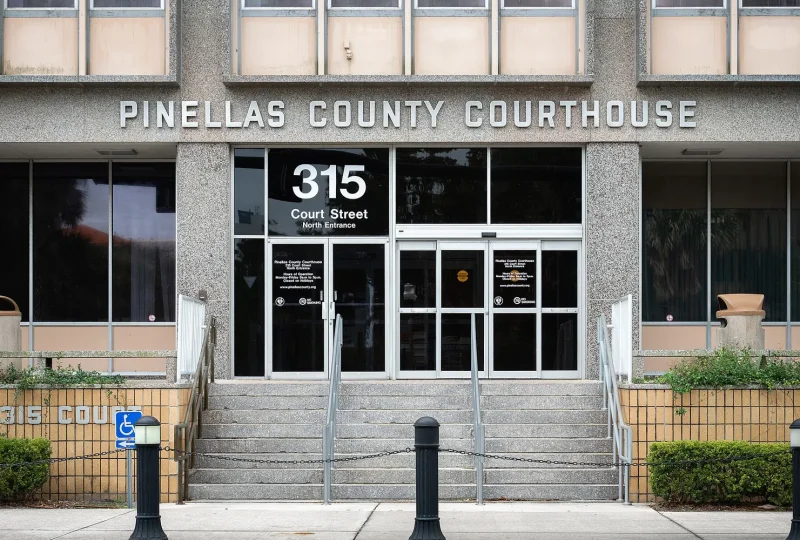
No. Everything here is general legal-education content for Florida and Pinellas County. Laws change, facts vary, and only a licensed attorney can advise you on your situation.
Stay calm, be respectful, do not resist, and clearly invoke your right to remain silent and your right to counsel. Avoid answering substantive questions until you speak with a licensed attorney.
Misdemeanors generally carry up to one year in county jail, fines, and probation. Felonies are more serious and can carry state-prison time, longer probation, and lasting collateral consequences such as loss of certain rights.
After booking, a first-appearance judge reviews the case and sets release conditions, which may include a cash bond, surety, release on recognizance, or pretrial supervision based on the charges and history.
In many cases yes — when there was no adjudication of guilt and eligibility requirements are met. Sealing and expungement are separate processes with strict criteria, and only a licensed attorney can confirm eligibility.
As early as possible. Early counsel can protect your rights during investigation, advise on what to say, prepare for first appearance, and develop a defense strategy from day one.
No. The Fifth Amendment protects the right to remain silent at trial. Whether or not to testify is a strategic decision made with your attorney based on the evidence and theory of the case.
It is a Florida sentencing option where the court withholds a formal finding of guilt after a plea or finding. It does not erase the record, but in eligible cases it can preserve certain rights and sealing eligibility.
Consult a licensed attorney for legal advice.
Tell us your charge type, court stage, and top concerns. We assemble a printable checklist of questions and documents to bring.
Prepare smart questions, gather your documents, and walk into your consultation feeling organized — not overwhelmed.
We build legal-education content the way we would want it built for ourselves — calm, accurate, transparent, and reviewed.
Content cites Florida statutes, court rules, and reputable public legal resources before paraphrasing them into plain language.
Educational content is reviewed by a licensed Florida criminal defense attorney for clarity, accuracy, and tone.
Guides include a "last updated" date. We refresh content when statutes, court rules, or procedures meaningfully change.
Tool selections save in your browser, not on a server. No legal-situation data is collected by these educational tools.
No fear-based copywriting, no promised outcomes, no clickbait. We help readers think clearly — and consult an attorney.
Every page, tool, and result clearly states that this site is educational and not a substitute for advice from a licensed attorney.
This website is for informational purposes only and does not provide legal advice. Consult a licensed attorney for guidance about your specific situation.