On this page
Quick answer
In Pinellas County, as in the rest of Florida, a person who is arrested is either released on the bond set by the statewide bond schedule or brought before a judge within 24 hours for a first appearance, where the judge sets the conditions of release. Release can be on the person’s own recognizance, on a monetary bond paid in cash or through a bail bond agent, or under supervision with conditions.
Key takeaways
- Florida law says the purpose of bail is to make sure the defendant returns to court and to protect the community.
- A statewide uniform bond schedule has applied since January 1, 2024, but some people must see a judge before they can be released.
- The bond schedule does not bind the judge at first appearance, who can set a higher or lower amount or release without money.
- A bail bond agent charges a premium that is not returned, even if the case is dropped.
- Violating a release condition or missing court can lead to arrest, loss of the bond, and new charges.
The right to pretrial release
Article I, section 14 of the Florida Constitution provides that a person charged with a crime is entitled to pretrial release on reasonable conditions, unless charged with a capital offense or an offense punishable by life imprisonment and the proof of guilt is evident or the presumption is great. The court may order a person held without bond if no conditions can reasonably protect the community, assure the person’s presence at trial, or assure the integrity of the judicial process.
Section 903.046, Florida Statutes, states the purpose of a bail determination: to ensure the defendant appears at later proceedings and to protect the community against unreasonable danger from the defendant.
The statewide bond schedule
Under section 903.011, Florida Statutes, the Florida Supreme Court adopts a uniform statewide bond schedule each year. It lists a bond amount for many offenses so that a person can be released from jail shortly after booking, without waiting for a hearing. A circuit’s chief judge can set higher local amounts but generally cannot go lower without the Supreme Court’s approval. The Sixth Judicial Circuit, which covers Pinellas and Pasco counties, publishes its administrative orders on bond at jud6.org.
Who cannot be released before seeing a judge
The same statute lists people who may not be released until a judge considers their case at first appearance. The list includes a person who:
- was arrested for a felony while on pretrial release, probation, or community control;
- is a designated sexual offender or sexual predator;
- was arrested for violating a protective injunction;
- was arrested three or more times in the previous six months; or
- is charged with one of the listed serious offenses, which include capital, life, first-degree, and second-degree felonies and trafficking in controlled substances.
First appearance in Pinellas County
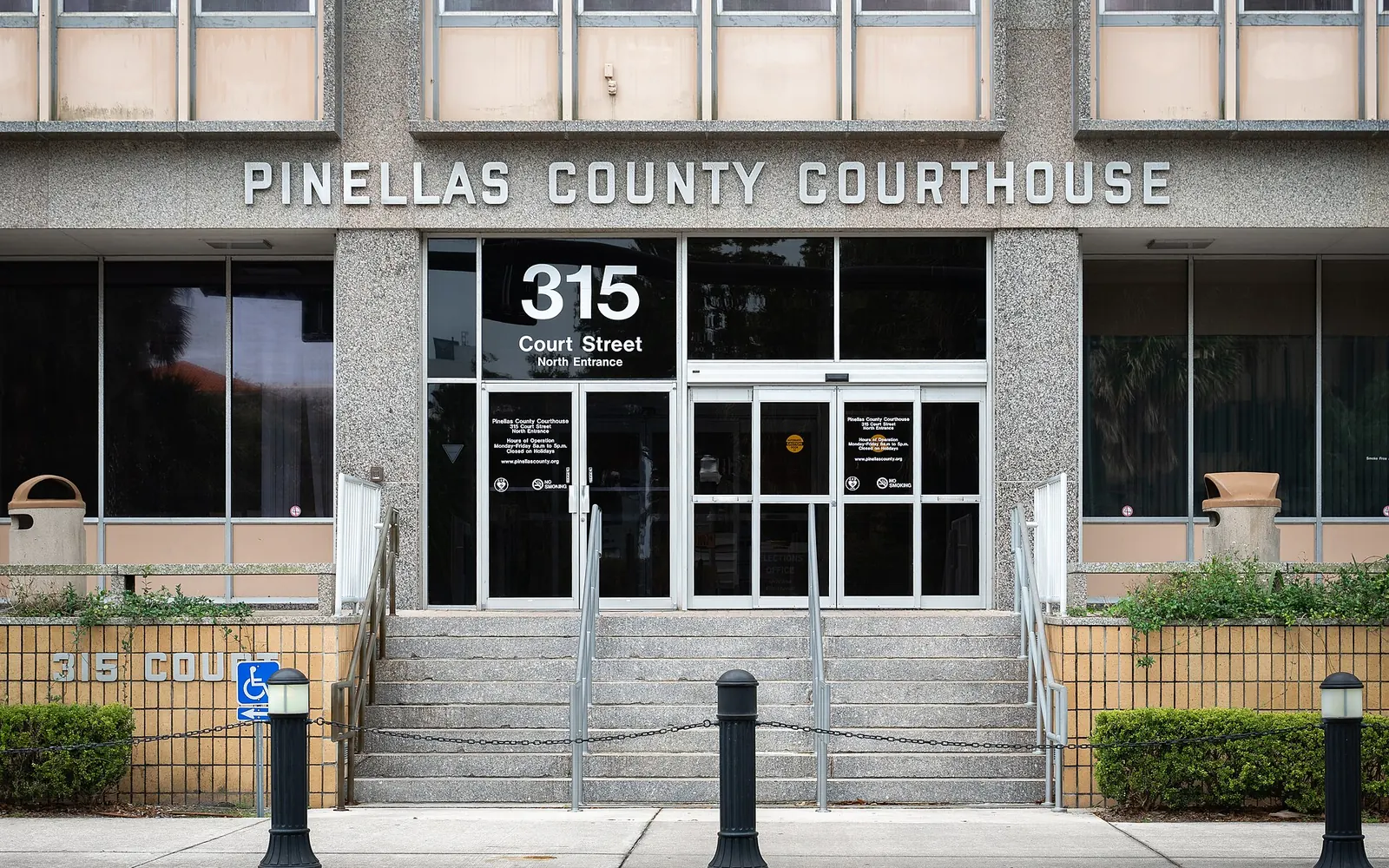
A person still in custody is brought before a judge within 24 hours of arrest. In Pinellas County these hearings are held at the Pinellas County Justice Center, 14250 49th Street North in Clearwater, and the person in custody commonly appears by video from the jail. The schedule does not bind the judge, who decides release individually. Our guide to what happens after an arrest in Florida describes the hearing.
What the judge considers
Section 903.046, Florida Statutes, lists the factors. They include:
- the nature and circumstances of the offense charged;
- the weight of the evidence;
- the defendant’s family ties, length of residence in the community, employment history, and financial resources;
- the defendant’s past conduct, including prior convictions and any failure to appear in court;
- the danger to the community and to any victim; and
- the source of the money used to post bond.
Types of release
| Type | How it works | Cost |
|---|---|---|
| Release on own recognizance (ROR) | Release on a written promise to appear, with no money posted. | None |
| Cash bond | The full amount is deposited. It is returned at the end of the case if the defendant made every appearance, less any fines, fees, and costs the clerk is required to deduct. | Full bond amount, refundable subject to deductions |
| Surety bond | A licensed bail bond agent guarantees the full amount to the court in exchange for a premium and, often, collateral. | The premium, which is not refunded. For state charges it is typically 10 percent of the bond. |
| Supervised release | Release under the supervision of a pretrial program, with conditions such as reporting or electronic monitoring. | Varies |
See the glossary entry for bond.
Conditions of release
Every pretrial release carries conditions. Section 903.047, Florida Statutes, requires that the defendant refrain from criminal activity of any kind and, when the court orders it, have no contact with the alleged victim. Judges can add conditions to fit the case, such as a curfew, travel limits, no alcohol, or a monitoring device.
If a condition is violated or a court date is missed
- Revocation. Under section 903.0471, Florida Statutes, a court may revoke pretrial release and order a defendant held if it finds probable cause to believe the defendant committed a new crime while on release.
- Forfeiture. If a defendant fails to appear, the bond is forfeited and a warrant can be issued.
- A new charge. Willfully failing to appear is a separate crime under section 843.15, Florida Statutes: a third-degree felony when the underlying case is a felony and a first-degree misdemeanor when it is a misdemeanor.
- No-contact orders. A law that took effect October 1, 2026 makes it a separate crime to willfully violate a no-contact order while on pretrial release for certain violent offenses.
Changing the bond
A defendant, usually through a lawyer, can file a motion asking the court to reduce the bond or change the conditions. The State can also ask the court to increase a bond or to hold a defendant without bond under the pretrial detention statute, section 907.041, Florida Statutes.
Common questions
How do I find out if someone is in the Pinellas County Jail?
The Pinellas County Sheriff’s Office publishes custody information online. Bond amounts and charges are shown once booking is complete.
Is the money paid to a bail bond agent returned?
No. The premium is the agent’s fee for guaranteeing the bond. Collateral is returned when the bond is discharged, provided the defendant met the conditions.
Can a person be held with no bond?
Yes, in limited situations: for some of the most serious charges, when a person is arrested for violating probation in certain cases, or when a court orders pretrial detention.
Does posting bond end the case?
No. Release only means the person waits for court outside jail. The case continues through the stages described in how the Florida criminal court process works.
When to speak with an attorney
A lawyer can appear at first appearance, present information about a person’s ties to the community, and ask the court to set or change release conditions. A person who cannot afford a lawyer can ask the court to appoint the public defender. Use the attorney consultation checklist to gather what a lawyer will ask for.
Official resources and sources
- Section 903.011, Florida Statutes — pretrial release; uniform bond schedule
- Section 903.046, Florida Statutes — purpose of and criteria for bail determination
- Section 903.047, Florida Statutes — conditions of pretrial release
- Section 903.0471, Florida Statutes — violation of condition of pretrial release
- Section 907.041, Florida Statutes — pretrial detention and release
- Section 843.15, Florida Statutes — failure to appear
- Pinellas County Justice Center — Sixth Judicial Circuit
- Pinellas County Sheriff’s Office — jail and custody information
- Sixth Judicial Circuit of Florida — administrative orders